How to Choose the Right Industrial Aluminum Profiles for Your Project?
When embarking on a project that requires Industrial Aluminum Profiles, making the right choice is critical. Expert James Carter, a consultant in the aluminum industry, once said, "Selecting the right profile can make or break your project." His insight underscores the importance of understanding the specific needs of your application.
Industrial Aluminum Profiles come in various shapes and sizes, each serving different purposes. Matching the profile to your project’s requirements involves careful consideration of load-bearing capacity, environmental factors, and aesthetic appeal. Clients often find this process daunting, leading to concerns about cost and functionality.
Creating an effective solution requires balancing quality with project demands. Mistakes in profile selection can lead to delays and increased expenses. Therefore, thorough research is essential. Consider engaging with professionals who specialize in Industrial Aluminum Profiles. Their expertise can provide valuable guidance and help you avoid common pitfalls in the selection process.

Understanding Industrial Aluminum Profiles: A Comprehensive Guide
Industrial aluminum profiles are essential components in various engineering projects. Selecting the right profile can significantly impact the efficiency and durability of your construction. Understanding the differences between various profiles is crucial. For instance, hollow profiles provide lightweight solutions, while solid profiles offer robust support. Choose according to the demands of your specific application.
Material quality also matters greatly. Profiles vary in strength and corrosion resistance. Ensure you’re choosing aluminum alloy suited for your climate conditions. Many overlook the importance of surface treatment. Anodizing can enhance durability, yet it might raise costs. Reflect on whether the benefits justify the extra expense.
Additionally, consider compatibility with existing systems. Not all profiles fit seamlessly with pre-existing components. Errors in this can lead to costly adjustments. There’s no one-size-fits-all answer when selecting profiles. The ideal choice aligns with your project’s unique requirements, budget, and timeline. Always be ready to adjust your approach based on what you learn along the way.
Identifying Your Project Requirements and Specifications
When selecting industrial aluminum profiles, understanding the specific requirements of your project is crucial. Begin by assessing the intended application. For example, structural profiles must handle different loads compared to those used for aesthetic purposes. According to industry reports, nearly 75% of construction projects experience delays due to inadequate material specifications.
Next, consider the environmental conditions your profiles will face. Factors such as humidity, temperature variations, and exposure to chemicals can greatly affect performance. The Aluminum Association states that corrosion-resistant profiles can extend service life by up to 50%. Use materials that match your project’s environment to minimize future maintenance issues.
Budget constraints are another essential factor. While cheaper options may seem appealing, they can lead to higher costs in the long run. A study by Market Research Future indicates that investing in high-quality aluminum can save up to 30% over time. Be cautious, as low-quality profiles may compromise project integrity. Balancing cost and quality is a key reflection point when making your choices.
Exploring Different Types of Aluminum Profiles Available
When exploring different types of aluminum profiles available, it’s essential to understand their specific characteristics. Aluminum profiles come in various shapes, including T-slot, square, and rectangular configurations. Each shape serves distinct purposes. For example, T-slot profiles are popular for modular structures and easy assembly, making them ideal for custom solutions.
Research indicates that the global aluminum extrusion market is expected to reach USD 160 billion by 2027, highlighting the demand for these materials. Various industries use aluminum profiles, from automotive manufacturing to construction. Profiles can be customized through anodizing or powder coating, enhancing durability and aesthetics. Consider the load-bearing capacity if your project requires structural support.
Not all aluminum profiles are created equal. It’s worth noting that some cheaper options may not meet safety standards. Potentially, using low-grade material may lead to failures in critical applications. Understanding these nuances is vital for selecting the right profile. It's prudent to evaluate suppliers based on their certification and reliability to ensure the integrity of your choices.
Different Types of Industrial Aluminum Profiles
Evaluating the Mechanical Properties of Aluminum Profiles
When selecting aluminum profiles for industrial applications, a thorough evaluation of their mechanical properties is essential. Mechanical properties such as tensile strength, yield strength, and hardness play a critical role in determining their suitability for specific projects. Tensile strength refers to the material's ability to withstand tension, while yield strength indicates the stress at which the material begins to deform. Understanding these properties helps in assessing the load-bearing capacity of the profiles.
Another key aspect to consider is the hardness of the aluminum profile. Hardness affects wear resistance, making it crucial for applications involving friction or impact. For example, profiles used in machinery or structural components require higher hardness levels. Additionally, factors like corrosion resistance and thermal conductivity should not be overlooked. These attributes can significantly influence the longevity and effectiveness of the profiles in demanding environments.
However, not all aluminum profiles meet every requirement perfectly. Some may excel in tensile strength but lack corrosion resistance. Others may be ideal for lightweight structures but fall short in durability. When evaluating aluminum profiles, it is vital to weigh the trade-offs in mechanical properties. This reflective approach ensures that the chosen profiles align with project demands, while also acknowledging their limitations.
How to Choose the Right Industrial Aluminum Profiles for Your Project?
| Profile Type |
Alloy |
Tensile Strength (MPa) |
Yield Strength (MPa) |
Weight (kg/m) |
Applications |
| Standard Square Profile |
6063 |
210 |
150 |
2.5 |
Frames, Supports |
| Rectangular Tube Profile |
6061 |
310 |
200 |
4.0 |
Structural Support, Machinery |
| Round Profile |
6060 |
240 |
170 |
1.8 |
Piping, Handrails |
| Angle Profile |
6082 |
260 |
230 |
3.0 |
Brackets, Frameworks |
Cost Considerations and Budgeting for Aluminum Profiles
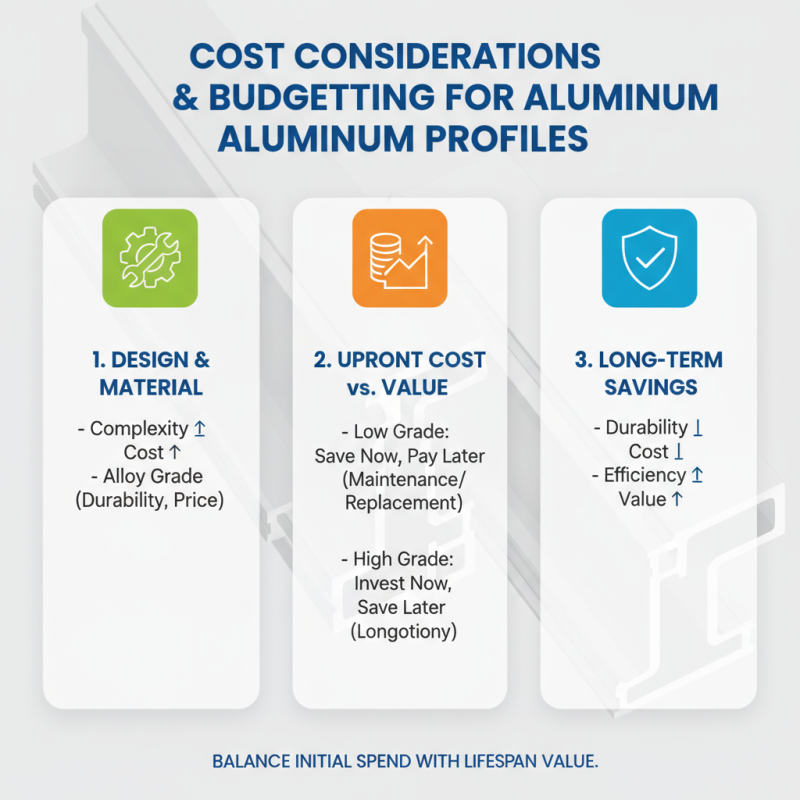
When selecting industrial aluminum profiles, budgeting is crucial. The costs can vary widely based on design complexity and material properties. Manufacturers offer different grades of aluminum, impacting durability and price. Lower-grade profiles may save money initially but can lead to higher maintenance and replacement costs later. It’s essential to balance upfront expenditures with long-term value.
Consider your project's specifications. Different applications demand various profile types. For instance, structural support requires robust profiles, which can be more expensive. Aesthetic designs might necessitate additional finishing processes, further affecting your budget. Understanding these needs can guide your purchasing decisions effectively.
Be aware of the quantity needed. Bulk purchases often reduce the unit price, but overestimating your requirements can strain finances. Review project scopes diligently to avoid excess spending. Additionally, seek expert opinions when uncertain. Getting advice from professionals can prevent miscalculations and ensure that your selections align with your budget constraints while meeting project demands.
Conclusion
When choosing the right Industrial Aluminum Profiles for your project, it's essential to have a comprehensive understanding of their various types and mechanical properties. Start by identifying your project's specific requirements, including dimensions, weight capacities, and environmental factors. This will help narrow down suitable profile options that meet your functional needs.
Additionally, evaluating the cost implications is vital for effective budgeting. Consider not only the price of the aluminum profiles but also the long-term performance and maintenance costs. Finally, sourcing and selecting reliable suppliers is crucial to ensure quality and timely delivery. By systematically analyzing these aspects, you can make an informed decision that aligns with your project's goals.