Buying an Aluminum Profile for an international project involves more than comparing prices. Alloy, temper, dimensions, surface finish, packaging, and certification can affect the final result. A profile that looks perfect on a screen may arrive with scratches, uneven anodizing, or incorrect tolerances.
Dr. J. Gilbert Kaufman, a respected aluminum metallurgy author, stated, “Alloy selection must be matched with processing and service conditions.” This principle remains practical for global buyers. A window frame, solar mounting rail, and industrial enclosure face different loads, temperatures, and corrosion risks. The cheapest option may create expensive rework.
Details matter.
Before requesting quotations, confirm the alloy grade, temper, wall thickness, length tolerance, and required finish. Ask whether the supplier controls extrusion, aging, cutting, and inspection internally. Request test reports, sample photographs, packaging details, and a clear defect-handling process. These checks reveal more than a polished catalog.
Still, no buying guide removes every uncertainty. Drawings may change. Local climate data may be incomplete. Communication can fail across time zones. I have seen buyers focus on unit price while overlooking mold charges, inland transport, and damaged bundles. That approach deserves reconsideration.
This guide presents ten practical Aluminum Profile buying tips for global buyers. It connects technical specifications with supplier reliability, shipment protection, quality verification, and long-term performance. Use the recommendations as a working checklist, not as a rigid formula. Your application should make the final decision.
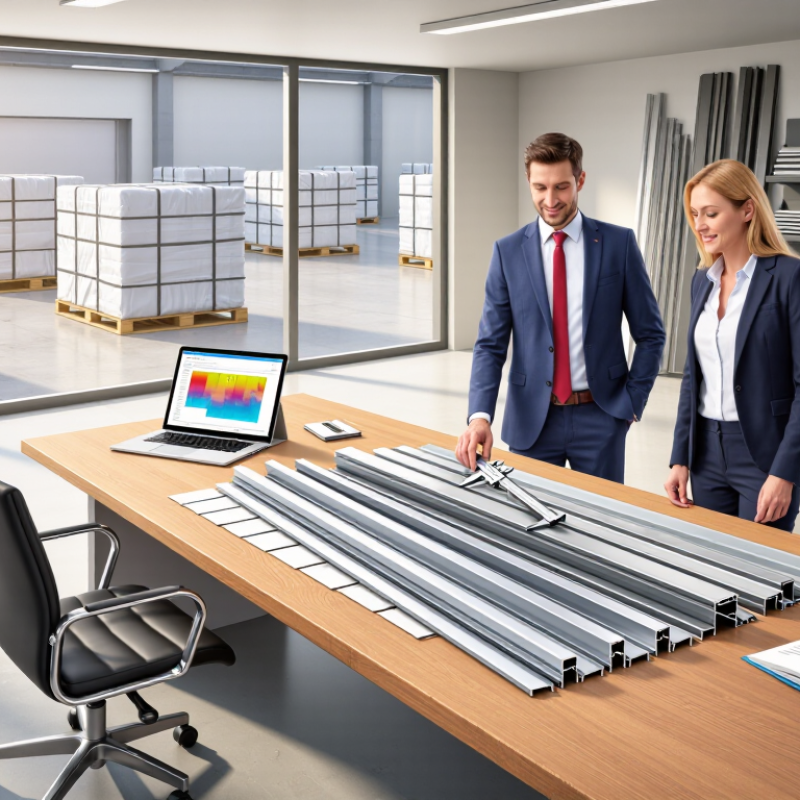
Before requesting quotations, describe where the profile will work. A window frame, machine guard, solar structure, and retail display need different designs. Record the expected load, span, operating temperature, humidity, and contact with chemicals. Include a drawing with dimensions, wall thickness, holes, slots, and acceptable tolerances. Small omissions can create expensive revisions.
Tip: Match the alloy and temper to the application. Strength may matter most for a structural frame, while easy machining may matter more for an equipment enclosure. Specify the required surface finish, such as anodized or powder-coated, only after checking the environment. A coastal installation needs stronger corrosion protection than an indoor display. Do not overlook assembly. Profiles joined with screws may require different tolerances than profiles connected with brackets.
A reliable requirement sheet should also state cutting length, quantity, packaging, inspection method, and documentation. Ask for material certificates and dimensional inspection records when traceability matters. Confirm whether the supplier can provide prototypes before mass production. This step often reveals interference, sharp edges, or weak connection points. I have seen buyers focus on price and later discover that a beautiful profile could not fit the selected fasteners. The first specification is rarely perfect. Review it with a designer, installer, and quality engineer. Their practical feedback can prevent avoidable waste and improve the final purchasing decision.
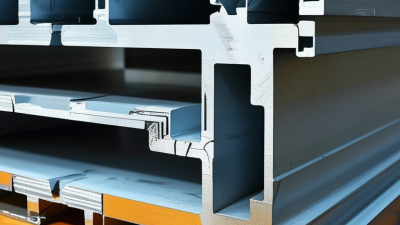
Choosing an aluminum alloy is not a catalog exercise. It should match the profile’s load, finish, and working environment. Alloy 6063 often suits architectural frames because it extrudes smoothly and accepts attractive finishes. Alloy 6061 offers higher strength for brackets, machine frames, and structural parts.
Temper changes performance. T5 can provide a practical balance between strength and extrusion efficiency. T6 is stronger but may increase cost, distortion, or machining difficulty. Confirm the required hardness and tensile values with the supplier’s mill certificate. Do not rely on alloy names alone. Different production routes can produce noticeably different results.
Profile design deserves equal attention. Keep wall thicknesses reasonably uniform to reduce twisting during cooling. Sharp internal corners may create stress and complicate extrusion. Add sensible radii instead. I have seen buyers request very thin walls, then face bending during cutting and transport. That choice looked efficient on paper. It was not. Check tolerances, cut length, surface treatment, and packing before placing an order. A small sample can reveal die lines, uneven color, and fit problems around screws or gaskets. Ask for trial measurements at several points, not just one attractive sample. No profile is perfect. The useful question is whether its weaknesses remain acceptable for the real application.
Check Dimensions, Tolerances, Surface Finish, and Quality
Request a clear drawing showing wall thickness, slot size, length, and cutting tolerance. A profile may look correct but fail during assembly because a 0.5 mm difference affects connectors. Check measurement points, not only the overall length. In production reviews, I have seen mismatched drawings create avoidable delays. That mistake is easy to make.
Standard tolerances may not suit sliding parts, frames, or precision equipment. Ask how measurements are recorded and whether inspection reports accompany each batch. Random checks offer useful evidence, but they cannot reveal every variation. Consider requesting sample profiles before placing a large order. It costs time. It may save much more.
Look for scratches, color differences, dents, uneven anodizing, and exposed edges. Define the required finish, gloss level, and acceptable visual limits in writing. Also confirm packaging, because clean profiles can be damaged during transport. Quality is not only appearance. Alloy consistency, straightness, hardness, and cutting accuracy matter too. I would avoid relying on photographs alone; images often hide small defects.
When comparing aluminum profile suppliers, I check production experience, equipment, and communication speed. A polished website proves little. Ask for factory photos, extrusion capacity, alloy options, and recent inspection records. I also request a sample with the exact wall thickness and surface finish. Small details reveal process control.
Certifications need careful checking. Ask whether ISO 9001 covers the manufacturing site, not only the trading office. Request alloy certificates, dimensional reports, coating results, and batch traceability documents. For architectural profiles, confirm the required standards in the destination market. Certificates should show issue dates, testing methods, and product scope. Do not accept unclear scans. That mistake costs time.
Pricing must be compared line by line. Include tooling, anodizing, powder coating, packaging, inland transport, and ocean freight. A low unit price may hide a costly die or weak packaging. Ask for payment terms and price validity. Minimum order quantities also matter. One supplier may require 500 kilograms, while another accepts 100 kilograms with a higher setup fee. A pilot order can test quality before a large commitment. My first supplier comparison ignored carton strength, and several profiles arrived scratched. I now inspect packaging photos and approve a pre-shipment sample. Imperfect planning is still better than repeating an expensive surprise.
| Buying Factor | Standard Extrusion Supplier | Custom Industrial Extruder | Architectural Profile Specialist | Integrated Fabrication Supplier | Recommended Buyer Check |
|---|---|---|---|---|---|
| 1. Typical Product Scope | Standard bars, channels, angles, tubes, and common framing profiles | Customer-designed structural, heat-sink, and machine-component profiles | Door, window, curtain-wall, solar-frame, and decorative profiles | Extrusion plus cutting, drilling, CNC machining, welding, and assembly | Confirm whether the supplier manufactures the profile or brokers it from another factory |
| 2. Common Alloys and Tempers | 6063-T56063-T6 | 6061-T66063-T56005A-T6 | 6063-T56063-T6 | 6061-T66063-T66082-T6 | Match the alloy and temper to strength, corrosion resistance, surface quality, and application requirements |
| 3. Relevant Standards | ASTM B221, EN 755, or equivalent national standards | ASTM B221, EN 755, EN 12020, or customer drawings | EN 12020, EN 755, ASTM B221, and architectural project specifications | Applicable extrusion standard plus machining, welding, and inspection standards | Request the exact revision of the standard and define acceptance criteria in the purchase contract |
| 4. Quality Certifications | ISO 9001 | ISO 9001ISO 14001 | ISO 9001Qualicoat where applicable | ISO 9001ISO 14001IATF 16949 where applicable | Verify certificate number, scope, validity, issuing body, and whether the certificate covers the actual production site |
| 5. Compliance Documents | Mill test certificate, alloy and temper statement, packing list | Mill test certificate, dimensional inspection report, RoHS and REACH declarations when requested | Coating certificate, color report, alloy certificate, and project traceability documents | Material certificate, process records, inspection report, and certificate of conformity | Specify required documents before quotation; documentation fees may apply for small orders |
| 6. Indicative Material Price | US$3.20–5.50/kg | US$4.00–8.50/kg | US$4.00–7.50/kg | US$7.00–18.00/kg | Use these as indicative planning ranges only; alloy, billet premium, profile complexity, finish, quantity, and freight can materially change the quote |
| 7. Typical Minimum Order | Stock items: 100–300 kg; custom dies: commonly 500–1,000 kg | Commonly 500–2,000 kg per profile, depending on die size and production plan | Commonly 300–1,000 kg per finish and profile | Commonly 100–500 finished pieces, plus setup and tooling requirements | Confirm whether MOQ is based on kilograms, pieces, profile, finish, or total order value |
| 8. Tooling and Die Charges | Existing die: usually no new charge; new die: approximately US$80–600 | New die: approximately US$150–1,500 or more for large and complex sections | New die: approximately US$150–1,200, with additional finishing samples possible | Die charge plus fixture, CNC programming, and inspection-tooling costs may apply | Ask who owns the die, how long it is retained, and whether the charge is refundable after volume orders |
| 9. Surface Finishes | Mill finish, anodizing, powder coating | Mill finish, anodizing, powder coating, brushing, and polishing | Anodizing, powder coating, wood-effect coating, brushing, and decorative finishes | Standard finishes plus masking, selective finishing, and post-machining treatment | Define coating thickness, color tolerance, gloss level, adhesion test, and protected-surface requirements |
| 10. Dimensional Capability | Typical commercial tolerance under EN 755 or ASTM B221 | Closer tolerances may be available with controlled tooling and inspection | Profile straightness, twist, wall thickness, and visible-surface quality are critical | Extrusion tolerance plus machining tolerances must be specified separately | Do not request “high precision” without stating numerical tolerances on the drawing |
| 11. Sample and Production Lead Time | Stock: approximately 1–3 weeks; custom: approximately 4–8 weeks | Die and samples: approximately 3–6 weeks; production: approximately 5–10 weeks | Samples: approximately 3–6 weeks; production: approximately 6–12 weeks | Prototype: approximately 4–8 weeks; production: approximately 8–14 weeks | Separate die approval, extrusion, finishing, fabrication, inspection, and shipping lead times |
| 12. Payment and Trade Terms | Deposit and balance before shipment; FOB or CIF commonly offered | Deposit for tooling and production; EXW, FOB, CIF, or DAP may be available | Deposit linked to color approval and production; FOB, CIF, or project-based delivery terms | Progress payments may be required for engineered assemblies; Incoterms negotiated per project | Compare total landed cost, not only the ex-works or FOB unit price |
| 13. Freight and Packaging | Bundle packing, cardboard, plastic film, or wooden crates | Profile separators, moisture protection, reinforced bundles, or export crates | Individual surface protection is more common for visible architectural profiles | Custom pallets, labels, kitting, and corrosion protection may be required | Confirm maximum bundle weight, container loading plan, moisture protection, and damage-claim procedure |
| 14. Best Fit for Buyers | Repeat orders of standard sections with price-sensitive requirements | Complex or load-bearing profiles requiring engineering support | Projects where appearance, finish consistency, and architectural compliance are priorities | Buyers seeking a single source for finished, ready-to-install components | Shortlist at least three supplier types and compare like-for-like specifications before selecting a quote |
10 Aluminum Profile Buying Tips for Global Buyers
Packaging is part of product quality, not an afterthought. Ask for bundle drawings before ordering. Each profile should have edge protection, moisture-resistant wrapping, and clear length labels. For anodized or painted surfaces, separate layers with soft film. Add desiccant for humid routes. A small scratch can become an expensive rejection.
UNCTAD’s Review of Maritime Transport 2023 states that more than 80% of global merchandise trade by volume moves by sea. Therefore, confirm the container plan, loading photos, gross weight, and shipping documents before dispatch. The World Bank’s Logistics Performance Index 2023 compares 139 economies and highlights timeliness, tracking, and supply-chain reliability. Request a milestone schedule covering production, inspection, port delivery, and arrival. Do not accept “fast shipment” as a lead-time promise. Define production days and transit days separately. Include a realistic buffer.
After-sales support needs written evidence. Confirm the claim period, response time, inspection method, and replacement process. Ask whether damaged profiles require photos, samples, or an independent report. Keep the purchase order, approved drawings, packing list, and loading images together. A recurring mistake is checking only the final price. I have seen cheaper cargo create higher costs through repacking, delays, and unusable lengths. My checklist is not perfect. It can still miss port congestion or sudden schedule changes. That is why weekly updates and one accountable contact matter.