Top Aluminum Heatsink Extrusion Manufacturers Worldwide
Choosing among the top Aluminum Heatsink Extrusion manufacturers worldwide requires more than comparing catalog dimensions or polished websites. A reliable evaluation must examine alloy control, extrusion accuracy, machining capability, surface treatment, thermal performance, and production consistency. These details affect real assemblies, from compact LED housings to high-power inverter cabinets.
Kaveh Azar, a recognized thermal-management engineer, has emphasized, “Thermal management is a system-level problem, not merely a component problem.” That principle guides this overview. An effective heatsink must match the processor, interface material, airflow, mounting pressure, and operating environment. A beautiful profile is not enough.
Small details matter.
The manufacturers discussed here are assessed through practical indicators, including engineering support, tooling expertise, quality systems, export experience, and customization capacity. Some suppliers excel at high-volume standard profiles. Others provide complex geometries, copper inserts, or close-tolerance finishing. Their strengths are not identical.
No ranking is flawless. A supplier may perform well in one market yet struggle with a demanding flatness tolerance or an unstable delivery schedule. That uncertainty deserves attention. Technical claims should be checked against drawings, test data, samples, and factory audits whenever possible.
This guide aims to help engineers, procurement teams, and product designers make more informed decisions. It focuses on measurable capability rather than promotional language. The best Aluminum Heatsink Extrusion partner is not always the largest company. Often, it is the manufacturer that understands the application, communicates clearly, and consistently delivers parts that work in the field.

What Is Aluminum Heatsink Extrusion? 6063 Alloy and ≈200 W/m·K Conductivity
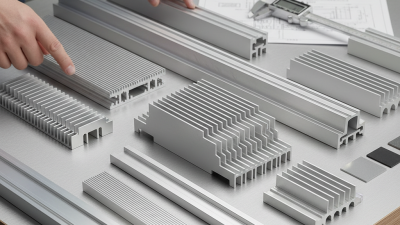
Aluminum heatsink extrusion is a process that pushes heated aluminum through a shaped die. The result is a long profile with fins, channels, or mounting features. These profiles can be cut to exact lengths for LED systems, power supplies, and industrial controls. 6063 aluminum alloy is widely selected because it offers good thermal performance, corrosion resistance, and clean surface finishing. Its conductivity is often listed near 200 W/m·K. That figure is not universal. Temper, testing method, and material quality can change the actual result.
Tips: Request the alloy temper, conductivity test data, and profile drawings. Check fin spacing before production. Narrow fins may improve surface area but restrict airflow. Also confirm flatness for the mounting base.
In practical design reviews, engineers should examine more than the alloy number. A thick base spreads heat more evenly, while taller fins need sufficient air movement. Anodizing can improve durability, but its surface layer may add contact resistance. Use thermal paste or a suitable interface pad where required. A common mistake is trusting the 200 W/m·K value without testing the complete assembly. Real performance depends on the heat source, airflow, contact pressure, and ambient temperature. Small details matter. Extrusion tolerances also affect assembly. If the profile bends slightly, the contact area may shrink. Prototype testing remains necessary, even when the material certificate looks perfect.
How Do Fin Density, Height, and Tolerance Affect Thermal Resistance?
Top Aluminum Heatsink Extrusion Manufacturers Worldwide
How Do Fin Density, Height, and Tolerance Affect Thermal Resistance?
Aluminum alloy selection sets the starting point. The ASM Handbook reports thermal conductivity near 150–235 W/m·K for common wrought aluminum alloys. Higher conductivity helps spread heat across the base. It cannot correct poor airflow. Fin density must match the cooling method. Dense fins add surface area, but narrow channels restrict natural convection. In forced-air systems, they can also increase pressure drop and fan power.
Fin height usually lowers thermal resistance by expanding the available area. The improvement eventually slows. Air near the fin tip may already be warm, so extra height contributes less heat transfer. The ASHRAE Handbook identifies airflow velocity, fin spacing, and surface temperature as connected design variables. There is no universal “best” spacing. A practical prototype should compare several densities, rather than trusting one simulation.
Tolerance is often underestimated. ASTM B221/B221M defines dimensional requirements for aluminum extrusion products, but production tolerances still affect assembly and airflow. A 0.1-millimeter spacing change can become significant across a dense fin field. Base flatness also controls contact resistance between the heatsink and heat source. JEDEC JESD51-3 emphasizes controlled thermal testing, yet real installations rarely stay perfectly controlled. That is the uncomfortable part. Dust, fan aging, and uneven mounting can erase small theoretical gains. Experienced manufacturers therefore inspect fin spacing, base flatness, and profile distortion before final thermal testing.
Top Aluminum Heatsink Extrusion Manufacturers Worldwide: How Do Fin Density, Height, and Tolerance Affect Thermal Resistance?
Representative engineering model for a 100 × 100 mm aluminum extrusion heatsink using 6063-T5 aluminum, 2 m/s forced airflow, and a 100 W heat load. Lower thermal resistance indicates better cooling performance. The values are independent of any manufacturer or brand.
Interpretation: Increasing fin density and fin height generally reduces thermal resistance by enlarging the available surface area. However, excessive density can restrict airflow and reduce the benefit. Greater dimensional tolerance slightly increases resistance because fin spacing and contact geometry become less uniform.
Which Global Manufacturers Offer High-Volume Heatsink Extrusion Capacity?
Top Aluminum Heatsink Extrusion Manufacturers Worldwide
High-volume heatsink extrusion depends on more than press size.
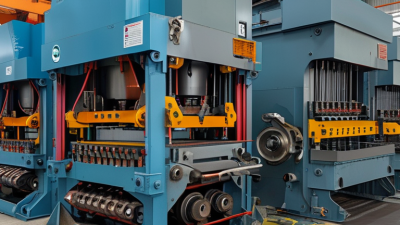
Manufacturers in East Asia, Europe, North America, India, and the Middle East commonly operate multiple extrusion lines. Many use presses ranging from 1,800 to 5,000 tons. This range supports large heat sinks, server chassis profiles, and thin fin designs.
According to Grand View Research, the global aluminum extrusion market reached approximately USD 78.6 billion in 2023. Its projected growth reflects rising demand from electric vehicles, renewable energy, and data centers.
Capacity must be measured carefully.
A factory may advertise high annual tonnage, yet dedicate limited lines to thermal profiles. Experienced buyers should verify billet availability, die-making resources, minimum order quantities, and monthly output.
The International Aluminium Institute reported about 70.6 million metric tons of global primary aluminum production in 2023.
That supply base supports international sourcing, but regional energy costs still affect pricing and lead times.
Surface treatment matters too.
Reliable suppliers often provide anodizing, powder coating, CNC finishing, and flatness inspection in-house. For high-volume programs, automated packing can prevent bent fins during long-distance shipping.
It sounds minor. It is not.
A 2024 thermal management market analysis by MarketsandMarkets identifies data centers and electric mobility as major growth areas.
Still, published capacity figures may not reflect real production during peak seasons. Factory audits, sample validation, and independent quality records remain necessary before selecting a global extrusion partner.
How Do EN 755-9, ISO 9001, and RoHS Define Manufacturer Quality?
Top Aluminum Heatsink Extrusion Manufacturers Worldwide
EN 755-9 defines measurable extrusion quality. It covers profile tolerances, including dimensions, straightness, and twisting. For heatsinks, these limits affect contact pressure and thermal performance. A fin that bends slightly can reduce airflow. Small details matter. Experienced quality teams verify samples with gauges, CMM equipment, and calibrated inspection records. The standard does not guarantee excellent design. It creates a common measurement language.
ISO 9001 focuses on controlled processes rather than aluminum alone. The ISO Survey 2022 recorded 1,265,216 ISO 9001 certificates worldwide. This figure shows broad adoption, but certification is not a miracle. Manufacturers should connect drawings, billet batches, extrusion parameters, aging records, and corrective actions. Traceability becomes important when a heatsink shows uneven anodizing or poor flatness. A strong supplier can explain the cause, not merely provide a certificate.
RoHS adds material control to mechanical quality. The European Commission limits ten restricted substances, including lead, mercury, and cadmium. Maximum concentration limits are generally 0.1% for most substances and 0.01% for cadmium. Suppliers should provide declarations, test reports, and controlled coating specifications. Independent laboratory testing improves confidence, especially for surface treatments and assembled thermal parts. Some documentation can still be incomplete. Buyers should check revision dates, laboratory scope, and product-level evidence before approval. That practical review often separates a compliant extrusion manufacturer from a merely well-presented one.