INQUIRY
Inquiry
Form loading...

How to Choose Aluminum Profile Extrusion Suppliers in 2026?

Choosing Aluminum Profile Extrusion suppliers in 2026 requires more than comparing price lists. Buyers must examine technical capability, production consistency, communication, and long-term reliability. A supplier may offer attractive pricing, yet struggle with complex dies, tight tolerances, or changing order volumes. Details matter.

Experienced buyers usually request alloy specifications, dimensional reports, surface-finish samples, and production photographs before approving a supplier. They also examine die design, extrusion press capacity, heat-treatment controls, and packaging methods. A reliable manufacturer should explain how it prevents defects such as twisting, scratches, uneven anodizing, and profile distortion. Ask for evidence. Promises are easy.

Supplier evaluation should also include traceability, inspection records, sample approval procedures, and realistic lead times. Certifications can support credibility, but they should not replace direct technical discussions or independent verification. A factory visit, video audit, or small trial order may reveal more than a polished website. This is where practical experience becomes valuable. Some suppliers communicate well during sampling but become slow after contracts are signed. That risk is easy to underestimate.

The best choice depends on your application, not a universal ranking. Architectural frames, solar mounting systems, machinery guards, and heat-sink profiles require different capabilities. Sustainability should be reviewed through recycled-content evidence, energy practices, waste handling, and transparent reporting. No checklist is perfect. However, a structured comparison helps buyers identify dependable Aluminum Profile Extrusion partners and avoid costly surprises throughout 2026.
How to Choose Aluminum Profile Extrusion Suppliers in 2026?

Define Your Aluminum Profile Requirements and Application Conditions

Choosing an aluminum extrusion supplier should begin with your application, not a catalogue. Define the profile’s function, load, and installation environment. A window frame, battery enclosure, and machine rail need different alloys, tempers, and tolerances. Global primary aluminum production reached about 70.6 million tonnes in 2023, according to International Aluminium Institute statistics. Material availability is broad, but suitable material is not always available.

Write down the critical dimensions before contacting suppliers. Include wall thickness, length, straightness, corner radius, hole locations, and acceptable tolerances. Specify the alloy and temper, such as 6063-T5 or 6061-T6, only after checking strength and formability requirements. Note exposure to salt spray, humidity, chemicals, vibration, and operating temperature. Small details matter. A beautiful drawing can still fail during assembly.

Ask suppliers for extrusion feasibility feedback, die-flow analysis, sample inspection records, and traceable material certificates. Request testing against relevant standards, such as ISO 6362, when applicable. Surface treatment also needs a measurable requirement, including anodizing thickness, color variation, or powder-coating performance. The International Aluminium Institute states that recycled aluminum uses roughly 95% less energy than primary aluminum, so recycled content may support sustainability goals. However, it can influence chemistry, finish consistency, and documentation. A perfect specification rarely exists on the first draft. Review one trial part under real conditions before approving mass production.
Evaluate Supplier Capabilities, Certifications, and Production Equipment

Choosing an aluminum profile extrusion supplier in 2026 requires more than comparing prices. Review its production capabilities through factory records, sample profiles, and recent delivery data. Ask whether the facility can manage your alloy, wall thickness, tolerance, profile length, and expected monthly volume.

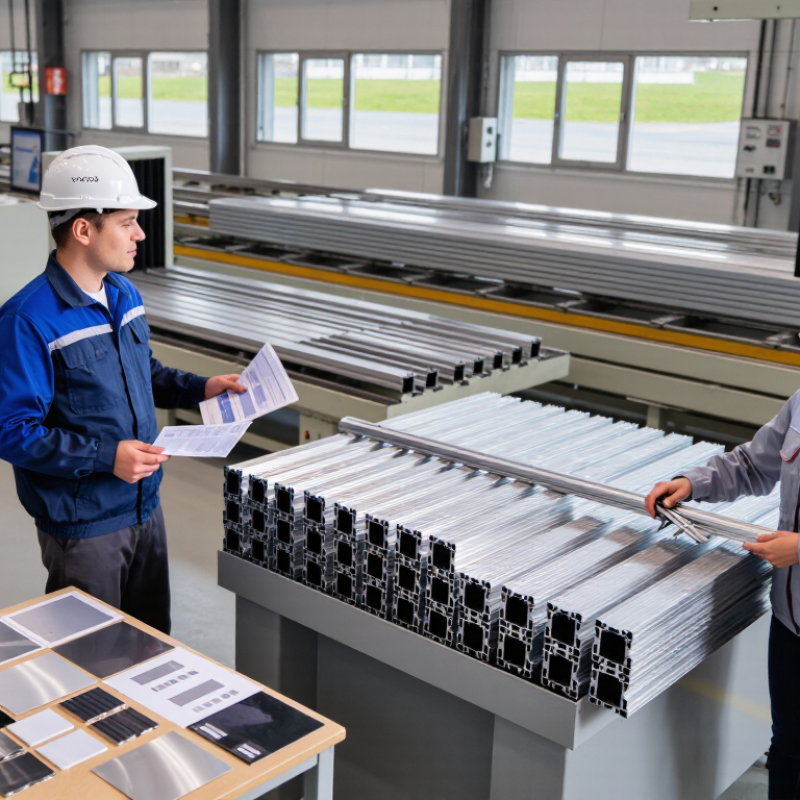
Production equipment reveals practical competence. Inspect extrusion presses, billet heating systems, cooling tables, pullers, cutting machines, and aging ovens. Modern equipment helps, but maintenance matters more than appearance. Request calibration records for measuring tools and test reports for hardness, dimensions, and surface quality. A supplier should explain how it controls defects such as twisting, die lines, scratches, and inconsistent aging. I have learned that an impressive machine list can still hide weak process discipline.

Certifications also need careful verification. Check whether quality, environmental, and occupational safety certificates are current, applicable, and issued by recognized bodies. Confirm the certificate scope matches aluminum extrusion, not only office administration. Ask for traceability from billet batch to finished bundle. That detail can save time when a dimensional problem appears months later.

Tips: Visit the plant if possible. Watch one production shift, not only the showroom. Compare approved samples with mass-produced pieces. Ask uncomfortable questions about rejected profiles, tooling delays, and corrective actions. A supplier that admits a weakness may be more reliable than one promising perfect results. Avoid choosing too quickly; the cheapest quotation often excludes packaging, testing, or die maintenance.

How to Choose Aluminum Profile Extrusion Suppliers in 2026? - Evaluate Supplier Capabilities, Certifications, and Production Equipment

Evaluation Dimension Recommended 2026 Benchmark Acceptable Supplier Evidence Evaluation Weight Risk if Not Verified
Extrusion Press Capacity Press range matched to the required profile size; approximately 600–2,000 metric tons for common architectural and industrial profiles. Equipment list, press specifications, maximum billet diameter, maximum profile envelope, and recent production records. 12% Inability to produce the required cross-section, unstable dimensional control, or excessive scrap.
Dimensional Control Documented inspection against the applicable profile drawing and the relevant aluminum extrusion standard; tolerance capability must be confirmed for each critical dimension. Inspection plans, calibrated measuring equipment, first-article inspection reports, capability studies, and corrective-action records. 14% Assembly interference, rework, field failures, and inconsistent fit between production lots.
Alloy and Temper Control Material designation, temper, chemical composition, and mechanical properties must conform to the purchase specification; common architectural alloys include 6063 and 6061. Mill certificates, heat or batch traceability, independent chemical analysis when required, and hardness or tensile-test results. 12% Incorrect strength, corrosion behavior, machinability, or compatibility with the approved design.
Surface Finishing Capability Required process available in-house or through a controlled partner: anodizing, powder coating, liquid coating, polishing, or mill finish. Process flow chart, coating or anodizing specifications, color-control procedure, adhesion testing, thickness records, and sample approval process. 12% Color variation, insufficient coating thickness, poor adhesion, surface defects, or premature corrosion.
Tooling and Die Management Dedicated die-design capability, die correction procedures, preventive maintenance, and documented control of die revisions. Die drawings, revision history, die-maintenance logs, trial-extrusion reports, and ownership terms for customer-funded tooling. 10% Long development cycles, repeated die charges, profile distortion, and uncontrolled design changes.
Quality Management System A current ISO 9001 certificate issued by an accredited certification body, supported by internal audit and nonconformance procedures. Certificate scope, validity dates, audit status, quality manual, process KPIs, and sample corrective-action reports. 10% Uncontrolled processes, weak root-cause analysis, and inconsistent response to quality incidents.
Environmental Management ISO 14001 certification or equivalent documented controls for energy, water, waste, emissions, and chemical management. Valid certificate, environmental objectives, waste-disposal records, wastewater controls, and evidence of aluminum scrap segregation and recycling. 7% Regulatory exposure, supply-chain sustainability concerns, and higher lifecycle costs.
Occupational Health and Safety ISO 45001 certification or an equivalent documented safety-management system covering presses, furnaces, chemicals, lifting, and maintenance. Certificate scope, risk assessments, incident statistics, emergency procedures, training records, and contractor controls. 5% Production interruptions, legal liability, worker injury, and reputational damage.
Automotive or High-Reliability Readiness For automotive applications, prioritize IATF 16949 certification or a formally documented equivalent customer-specific quality system. Certificate scope, control plans, process-FMEA records, measurement-system analysis, traceability procedure, and change-control records. 6% Failure to meet sector-specific documentation, traceability, or product-approval requirements.
Testing and Laboratory Resources Access to calibrated equipment for dimensional, hardness, tensile, coating-thickness, color, and corrosion-related testing as specified by the project. Calibration certificates, test methods, laboratory competence records, sample test reports, and subcontracted-laboratory approvals. 7% Undetected material or finish defects and unreliable acceptance decisions.
Capacity and Delivery Reliability Documented monthly capacity, realistic tooling and sampling lead times, production planning, and on-time delivery performance for comparable orders. Capacity plan, anonymized delivery-performance data, production schedule, bottleneck analysis, and agreed escalation procedure. 5% Missed launch dates, line stoppages, premium freight, and unstable inventory planning.
Total Recommended Evaluation Weight 100% Select suppliers only after document review and sample validation.
Scoring guidance: Score each dimension from 0 to 5. Multiply the score by the evaluation weight, require valid certificates within their stated scope, and confirm all critical requirements through a production sample or first-article inspection before approval.

Compare Alloy Options, Extrusion Quality, and Customization Services

Choosing an aluminum profile extrusion supplier in 2026 requires more than comparing prices. Start with the alloy. 6063 aluminum suits clean surfaces, light frames, and architectural profiles. 6061 offers higher strength for machinery and load-bearing parts. Ask whether the supplier can explain temper, hardness, and corrosion performance in practical terms. Vague answers are warning signs.

Extrusion quality appears in details. Inspect sample profiles for straightness, wall thickness, surface lines, and corner accuracy. A reliable supplier should provide inspection records, dimensional tolerances, and batch traceability. Ask how dies are designed, maintained, and tested. Customization also matters. Confirm support for cutting, drilling, punching, anodizing, powder coating, and assembly. Share your drawings early. Good engineers may identify weak sections or unnecessary machining, although their first suggestion may not always be perfect.

Tips: Request a small trial order before committing. Measure twice. Check the profile under real assembly conditions. Compare samples from different batches, not only one polished piece. Ask about minimum order quantities, tooling charges, packaging, and replacement procedures. A supplier with strong technical experience will discuss problems openly. That honesty is valuable, but still verify every claim through records and physical samples.

Assess Pricing, Lead Times, Quality Control, and Minimum Order Policies

Pricing should be checked against an aluminum index, not judged from one attractive quotation. The World Bank Pink Sheet recorded an average aluminum price near US$2,400 per metric ton in 2024. Ask suppliers to separate billet, die, extrusion, finishing, packaging, and freight costs. Confirm the surcharge formula and review period. A low quote can still hide expensive tooling or unstable energy adjustments.

Lead time needs measurable checkpoints. Request dates for drawing approval, die completion, trial extrusion, inspection, and shipment. A practical supplier should explain capacity during peak seasons. The USGS Mineral Commodity Summaries 2025 estimated global primary aluminum production at about 72 million metric tons in 2024. Large output does not guarantee your small order receives priority. That assumption deserves doubt. Require a written recovery plan for delays.

Quality control should include alloy certificates, dimensional reports, surface inspection records, and traceability from billet to bundle. ISO 9001 registration helps, but it cannot replace sample verification. Ask for process capability data on critical dimensions, such as wall thickness and straightness. The International Aluminium Institute reports that roughly 75% of aluminum ever produced remains in use. Durable extrusion quality supports that long service life. Minimum order policies also matter. Compare the minimum weight, finish-specific minimum, and mixed-profile rules. A supplier accepting ten kilograms may charge heavily for setup. Before approval, test one realistic batch, including your actual tolerance and surface finish. Allow room for revision; drawings often improve after the first production run.

Verify Supplier Reliability Through Samples, Audits, and Contract Terms

Choosing an aluminum profile extrusion supplier in 2026 should begin with evidence, not polished presentations. Request production samples matching your intended alloy, temper, dimensions, and surface finish. Inspect straightness, wall thickness, corner definition, and visible marks under normal lighting. Ask for dimensional reports and material certificates tied to the sample batch. A sample that arrives quickly is useful, but it proves little about repeatability. Request a second batch later. That extra step often reveals process variation.

Audits should examine the working process, not only the reception area. Review extrusion presses, die storage, calibration equipment, finishing lines, and inspection records. Speak with production and quality staff. Their answers can expose unclear responsibilities or rushed approvals. Check whether nonconforming profiles are isolated and corrected through documented actions. Verify capacity with recent orders, maintenance logs, and realistic lead times. Remote audits help, but an onsite visit may reveal details photographs miss. I have seen attractive facilities hide weak traceability; that possibility deserves attention.

Put every important promise into the contract. Define alloy standards, tolerances, finish acceptance limits, packaging, inspection methods, delivery dates, and approval procedures. Include rules for design changes, substitute materials, rejected goods, corrective action, and payment milestones. Require batch traceability and timely compliance documents. Avoid vague terms such as “premium quality.” They create arguments later. A small pilot order can test communication, packing, and actual consistency before larger commitments. Even a careful evaluation can miss a problem. Leave room for review after the first shipment, and record what failed, not only what passed.